
Hostel Life in Pakistan: What to Expect in Your First Year
Shared rooms, mess food, a warden and a lot of new freedom. Here's what university hostel life in Pakistan is really like, the problems most first-years hit, and a simple plan for your first month.
By ParhaiKrlo Team · Published 12 Oct 2026 · 4 min read
For many students, a university hostel is the first time they live away from home. It can be the best part of your degree or a tough first semester. Most of the difference comes from knowing what to expect and setting a few habits early.
What a Pakistani university hostel looks like
The details change from campus to campus, but most hostels have the same basics:
- A shared room, usually with one to three roommates. Single rooms are rare in first year.
- Shared washrooms on each floor.
- A mess or dining hall with fixed meal times. Many hostels run the mess on a monthly bill or an advance that is used up as you eat.
- A warden and hostel staff who handle security, rules and repairs.
- Hostel rules: gate timings, visitor rules and limits on cooking appliances. Read the hostel rulebook you're given on day one, because the rules differ a lot between universities.
Some campuses are fully residential. At GIKI in Topi, for example, the semester fee covers both tuition and accommodation, and the mess works on an advance with the actual charges deducted each month.
The good parts
- You learn to run your own life. Money, laundry, sleep and study time are all yours to manage.
- No commute. The library, labs and classes are a short walk away, so you get back hours every week.
- Study groups are easy. Someone down the corridor is always working on the same assignment.
- Friendships. The people you share a floor with often become friends for life.
- Campus life. Societies, sports and events are much easier to join when you live on campus.
The hard parts
- Different habits. One roommate sleeps at 11, another studies until 3.
- Noise, especially near exams.
- Less privacy than you're used to at home.
- Mess food gets repetitive, and cooking in rooms is usually not allowed.
- Homesickness. It's normal, it usually peaks in the first few weeks, and it fades once you have a routine.
None of these are signs you chose wrong. Almost every first-year deals with them.
Your first month, week by week
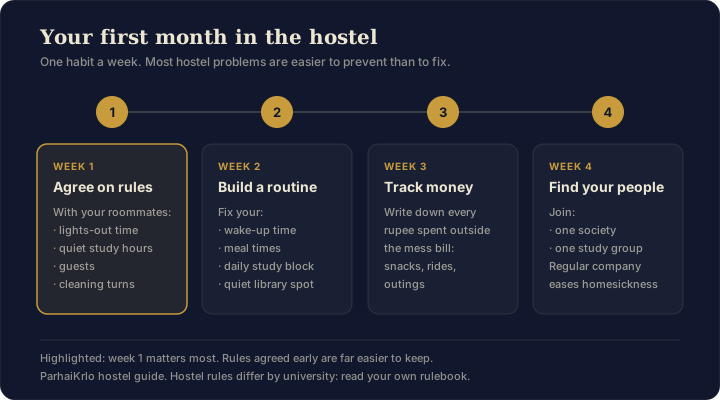
- Week 1: Agree on the basics. Sit down with your roommates and agree on lights-out time, quiet study hours, guests and cleaning. It's easier to set rules now than to fix habits later.
- Week 2: Build a routine. Fix your wake-up time, meal times and one study block every day. Find a quiet library spot for the days your room is noisy.
- Week 3: Track your money. Write down everything you spend outside the mess bill for one week. Snacks, rides and outings add up faster than most students expect.
- Week 4: Find your people. Join one society and one study group. Having people around you who study regularly makes it much easier to keep up.
Small habits that help
- Keep your side of the room clean every day, not just before inspections.
- Be on good terms with your warden. You'll need their help someday, for a late return, a repair or a room change.
- Carry earplugs and an eye mask. They're cheap and they fix most sleep problems.
- Call home on a fixed day. A regular call helps more with homesickness than calling only when you feel low.
- Keep a small first-aid kit and the hostel office's phone number in your phone.
Plan your monthly budget
Hostel and mess charges are very different at each university, and in each city. Before you arrive, ask your university or a senior for the actual numbers, and plan a budget with these lines:
- Hostel rent (often paid per semester)
- Mess bill or meal advance
- Laundry
- Toiletries and stationery
- Transport home and back
- Outings and snacks
If you need extra money, read our guide on how students can earn money in Pakistan. It covers tuition, freelancing and other work that fits around classes.
Frequently Asked Questions
How many students share a hostel room in Pakistani universities?
Most first-year hostel rooms are shared by two to four students. Single rooms are rare in first year. Ask your university's hostel office for the exact room types before you arrive.
Can I cook in a university hostel in Pakistan?
Usually not in your room. Most hostels have a mess or dining hall with fixed meal times, and many limit cooking appliances. Some allow an electric kettle. Check your hostel's rulebook before you pack one.
How much does hostel life cost per month?
It varies a lot by university and city, so there is no single number. Plan a budget with hostel rent, the mess bill, laundry, toiletries, transport home and outings, and ask your university or a senior for the actual rent and mess charges.
How do I deal with homesickness in the hostel?
Homesickness is common in the first few weeks and usually fades once you have a routine. Fix your daily timings, call home on a set day, and join one society and one study group so you have people around you.
Do I have to live in the hostel at GIKI?
GIKI is a residential campus in Topi, and its semester fee covers both tuition and accommodation. Check GIKI's current fee and hostel rules on giki.edu.pk before you apply.
Get the seat first
Hostel life starts with an admission letter. If you're still preparing for your entry test, practise with full timed papers:
- Free mock tests for MDCAT, NUST NET, LUMS LCAT, FAST and COMSATS
- Past papers with every answer explained
- Backup plan universities, if you want a safety net while you wait for merit lists