
FAST Entry Test 2027 Preparation Guide: A Simple Plan That Works
Preparing for the FAST-NU entry test 2027? Maths is 70% of the paper, there's negative marking and you get one attempt. Here's a short plan: build maths alongside FSc, then switch to timed mocks after your board exams.
By ParhaiKrlo Team · Published 15 Oct 2026 · 3 min read
Updated: 15 October 2026
Prepare for the FAST entry test 2027 by building your maths alongside FSc, then switching to full timed mocks after your board exams. Maths is 70% of the paper, so it gets most of your time.
Quick answer
- The 2027 dates aren't announced yet. In 2026, FAST held its tests from 29 June to 10 July, so expect early summer 2027. See our FAST 2027 dates post.
- The BS CS/Engineering test: Advanced Maths 50%, Basic Maths 20%, Analytical Skills & IQ 20%, English 10%.
- Negative marking, no calculator, and each section has its own timer.
- One attempt only. You can't resit the FAST test in the same cycle.
- The test is 50% of your merit for Computing programmes and 33% for Engineering.
Full details are in our FAST test pattern and syllabus guide.
Your plan, phase by phase
October to March: build your maths
FAST tests FSc and Matric maths. Learn each chapter properly for your board exams, and you're preparing for FAST too.
After each chapter, solve 20 to 30 MCQs on it without a calculator. Spend 15 minutes a day on IQ questions (series, analogies, puzzles) and on vocabulary.
April to May: board exams
Your FSc marks count for 40% of merit for Computing and 50% for Engineering. Give your boards full attention, and keep a few MCQs going each day.
June to test day: timed mocks
Switch fully to FAST. Sit two or three full mocks a week, and fix your weak topics between them.
Practise without a calculator
Most FAST maths questions are quick if you know the method. Practise doing them by hand from day one.
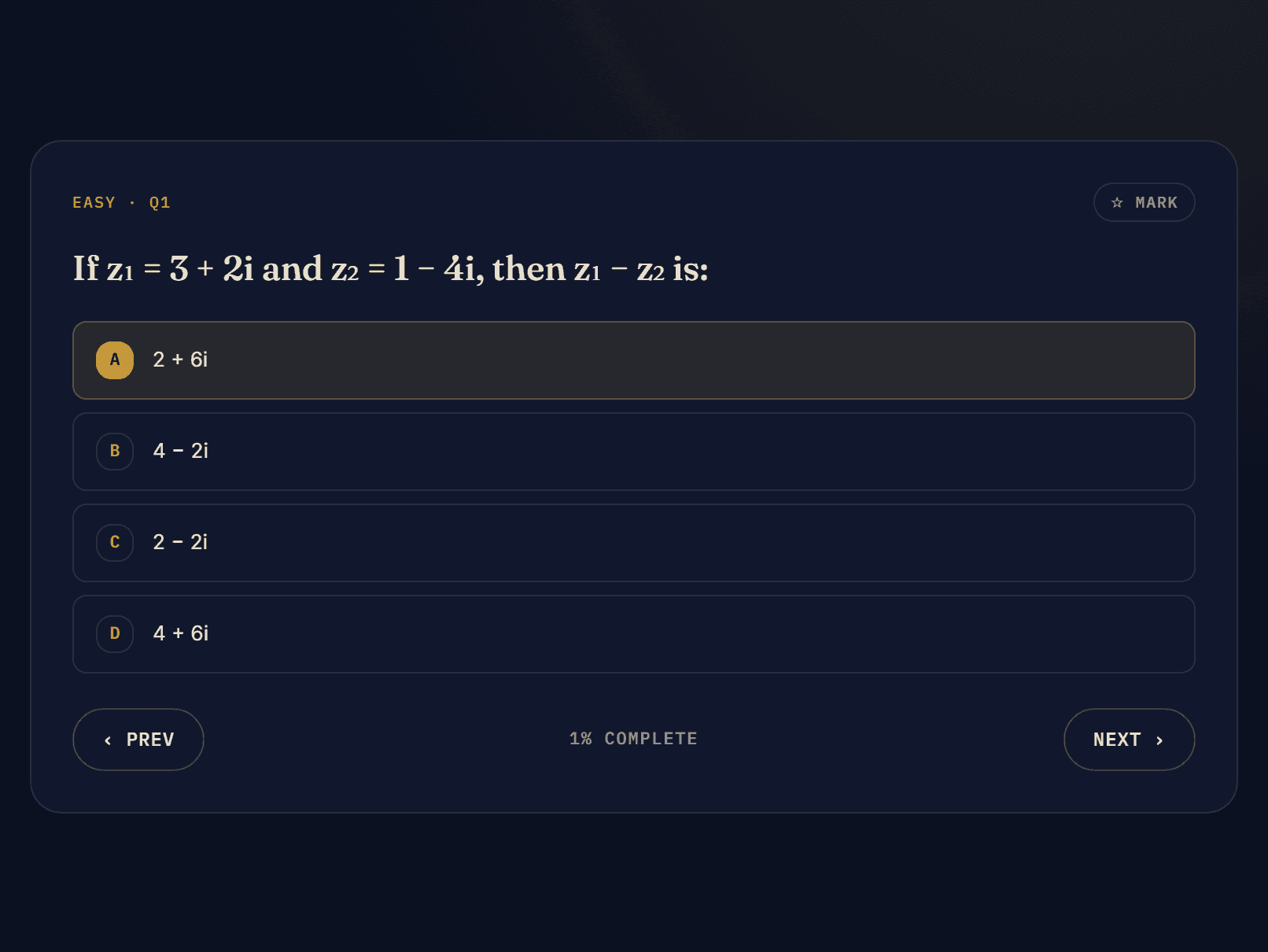
Start with our FAST-pattern papers. You can sit one section at a time, so do Advanced Maths sets on their own until they feel easy.
Take full timed mocks
FAST times each section separately, so time you save in English can't be spent on maths. Practise pacing each section on its own.
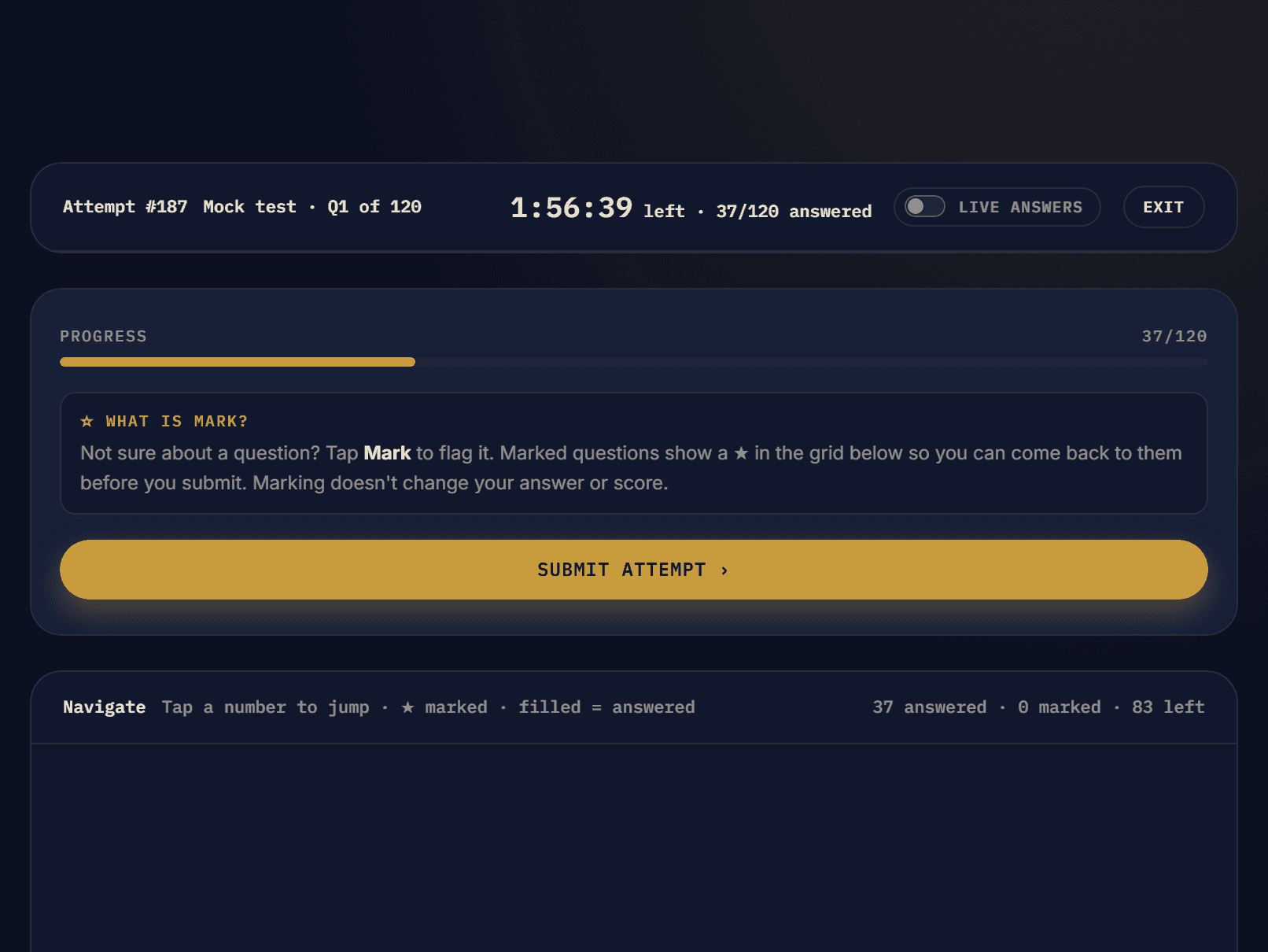
Sit full FAST mocks in one go with no phone. Our mocks run on one overall clock, so set yourself a time for each section as you go.
Review every attempt
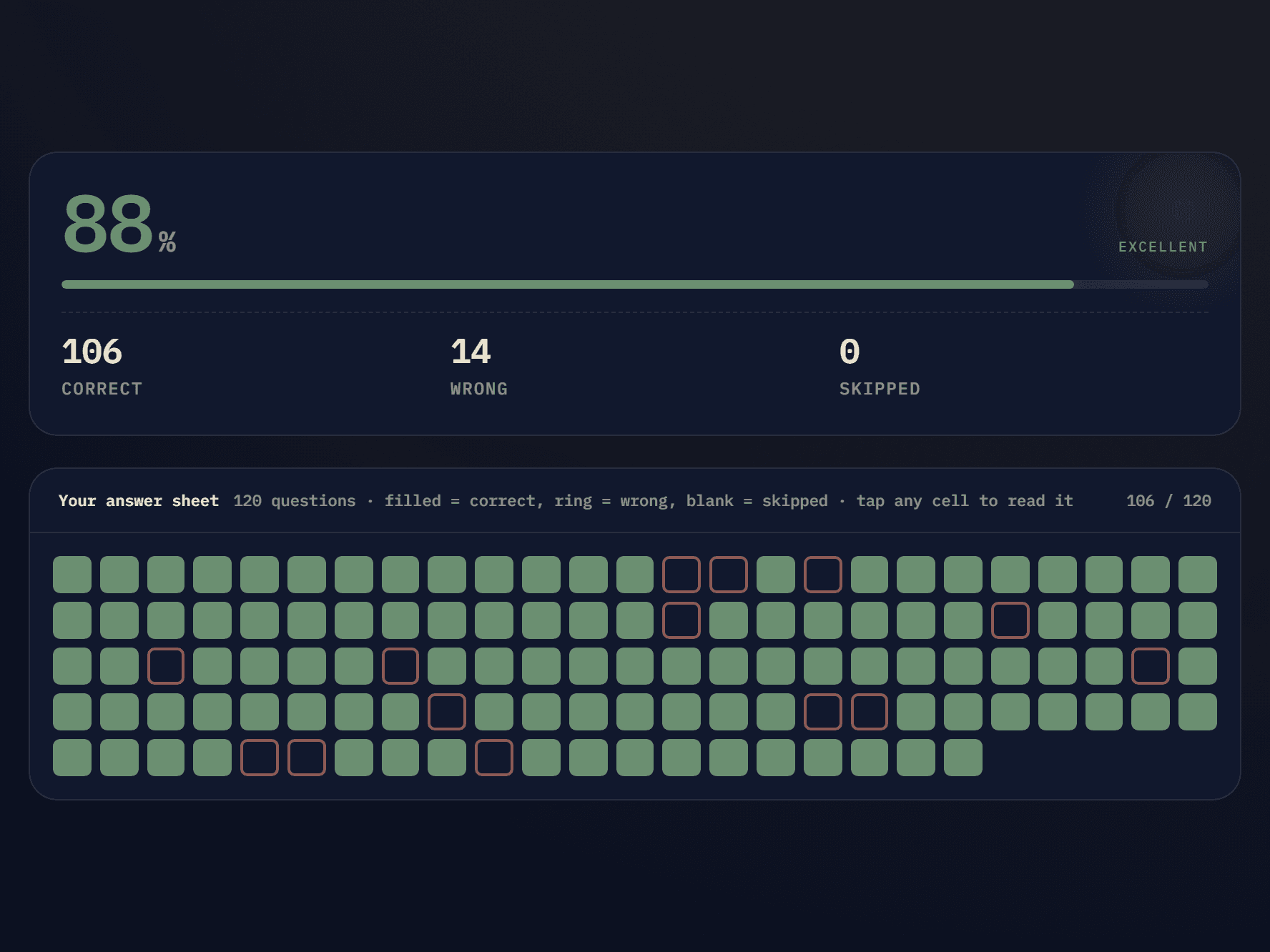
Go through each mock the same day or the next. Read the explanation for every wrong answer and every guess.
Because of negative marking, track your blind guesses too. If most of them are wrong, stop guessing blind. A guess is only worth it when you can rule out two options.
Mistakes to avoid
- Relying on a calculator in practice. You won't have one in the test.
- Ignoring IQ and English. Together they're 30% of the test.
- Guessing every question. Wrong answers cost marks.
- Rushing a section to "save time". Saved time is lost on FAST's section timers.
- Practising from old guides. The current pattern includes English at 10%; older papers may not.
Frequently Asked Questions
When is the FAST entry test 2027?
FAST hasn't announced the 2027 schedule yet. In 2026, tests ran from 29 June to 10 July, so expect early summer 2027, after the FSc board exams.
What is on the FAST entry test for BS CS and Engineering?
Advanced Mathematics 50%, Basic Mathematics 20%, Analytical Skills & IQ 20% and English 10%. There is no Physics or Chemistry. The test is computer-based, with negative marking and no calculator.
How should I prepare for the FAST test alongside FSc?
Build your maths chapter by chapter from October to March, solving MCQs by hand after each one. Focus on your boards in April and May, then sit two or three full timed mocks a week until the test.
Should I guess on the FAST test?
Not blindly. The test has negative marking, so a wrong answer costs marks. Guess only when you can rule out at least two options.
Can I take the FAST test more than once?
No. FAST allows each type of admission test only once per cycle, so prepare to sit it once, properly.
Next steps
- FAST-pattern past papers: practise section by section.
- Full FAST mocks: the full test under exam timing.
- FAST aggregate calculator: work out the score you need.
- FAST test tips for success: test-day strategy.
The pattern, marking, section timers and merit formula are from FAST's Test Pattern, How to Apply and Eligibility Criteria pages, checked for our FAST posts in October 2026. FAST announces the 2027 schedule separately, so check its admissions page when it's released.