
NUST NET 2027 Preparation Guide: How to Prepare, Step by Step
Preparing for NUST NET 2027? Maths is half the paper, there's no negative marking and only your best NET counts. Here's a short step-by-step guide: build your basics, use an early NET as a checkpoint, then switch to full timed mocks.
By ParhaiKrlo Team · Published 15 Oct 2026 · 3 min read
Updated: 15 October 2026
Prepare for NUST NET 2027 by building your Maths and Physics basics first, using an early NET as a checkpoint, and finishing with full timed mocks. Maths is half the paper, so it gets half your time.
Quick answer
- NET-Engineering is 200 MCQs in 3 hours: Maths 100 (50%), Physics 60 (30%), English 40 (20%).
- No negative marking. Never leave a question blank.
- Four series, best score counts. NET-1 tests start on 17 November 2026; NET-4 runs in June and July 2027. See our NET 2027 dates post.
- NET is 75% of your merit. FSc is 15% and Matric 10%.
Full details are in our NET 2027 pattern and syllabus guide.
Your plan, step by step
Step 1: build your basics (now to February)
Go chapter by chapter through FSc Maths and Physics. After each chapter, solve 20 to 30 NET-style MCQs on it.
Start with the topics that carry the most questions: trigonometry, differentiation, integration, and Motion and Force. Our NET topics post lists them.
Do 15 minutes of English vocabulary every day. It's 40 questions, and it builds up slowly.
Step 2: sit an early NET as a checkpoint
NUST counts only your best score, so an early series is low-risk. NET-2 (January to March) suits most FSc students. It shows you the real test and where you stand.
Not sure which series to take? Read NET-1, 2, 3 or 4: which should you take?
Step 3: board exams (April to May)
Your FSc marks still count for 15%. Focus on your boards, and keep a few MCQs going each day.
Step 4: timed mocks (June to NET-4)
Sit two or three full mocks a week. Fix your weak topics between them.
Short on time? Use our 3-month or 1-month plan instead.
Practise topic by topic
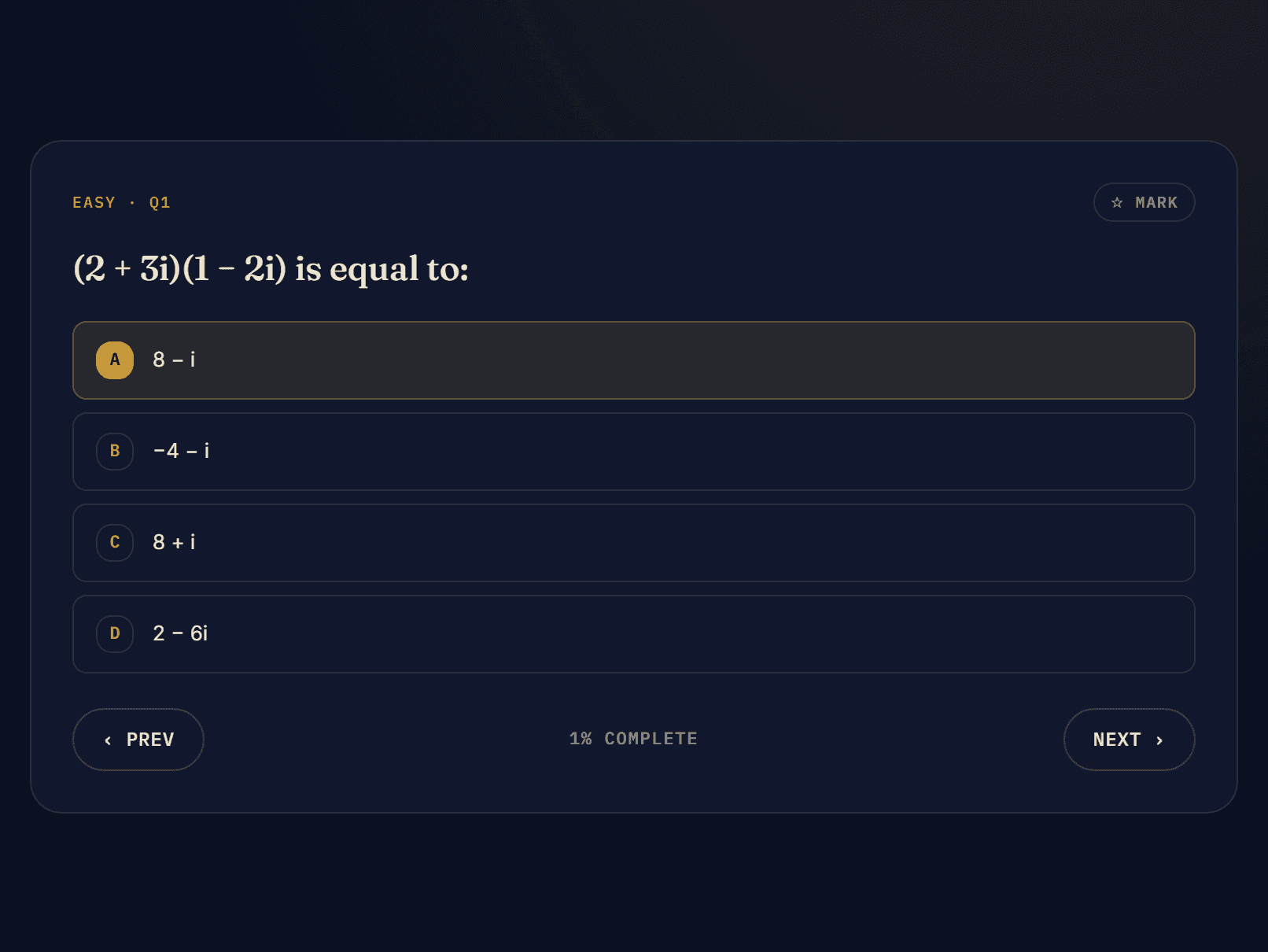
Practise every topic as soon as you finish it. Start with our NET-pattern papers. You can sit one subject at a time, so do Maths on its own until it feels quick.
Read the explanation for every wrong answer and every guess. Note each new formula or fact in a mistake notebook.
Take full timed mocks
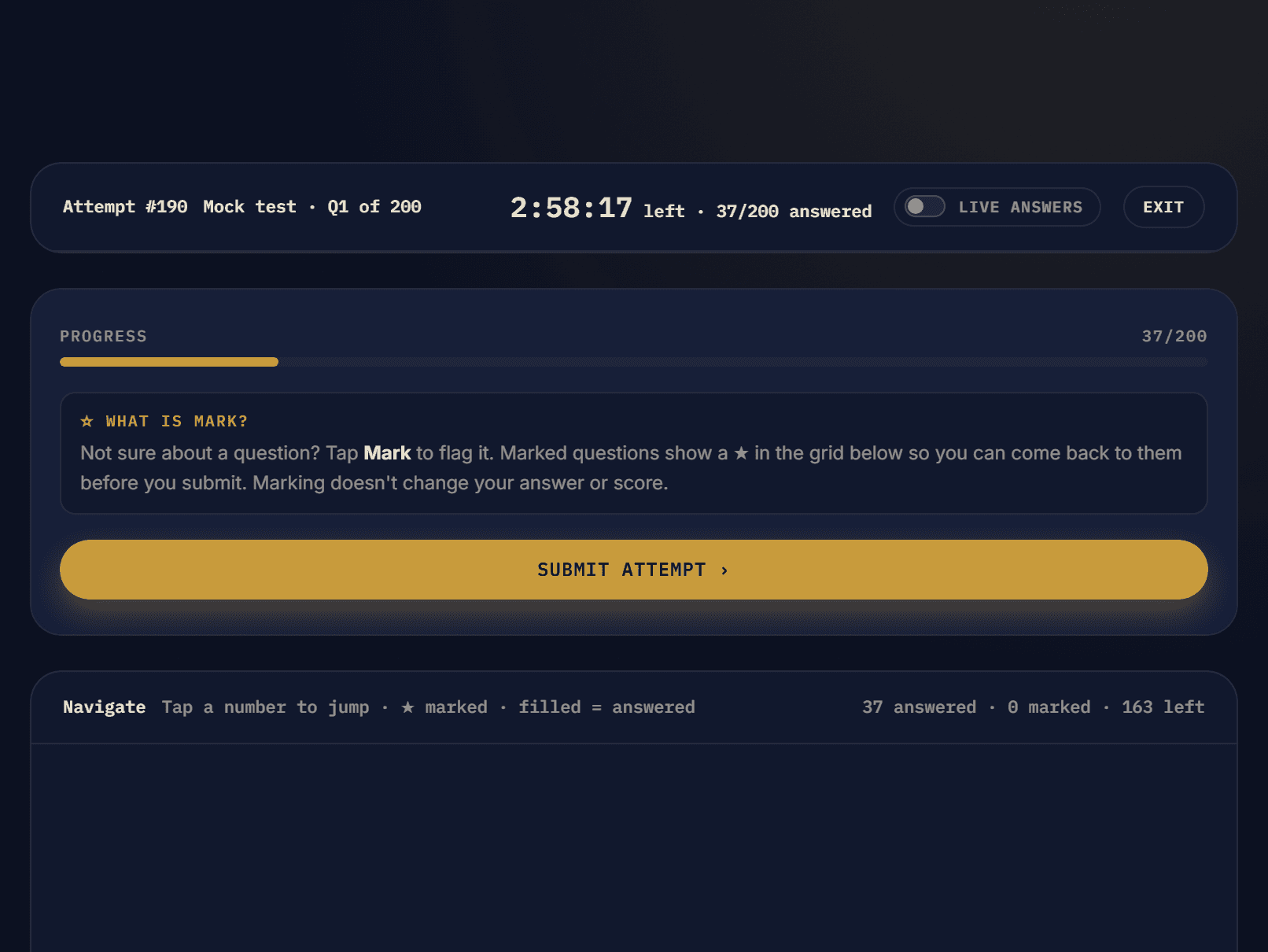
NET gives you about 54 seconds a question. Speed only comes from practising under the clock.
Sit full NET mocks in one go, with no phone. Star the questions you're unsure of and come back to them at the end.
Review every attempt
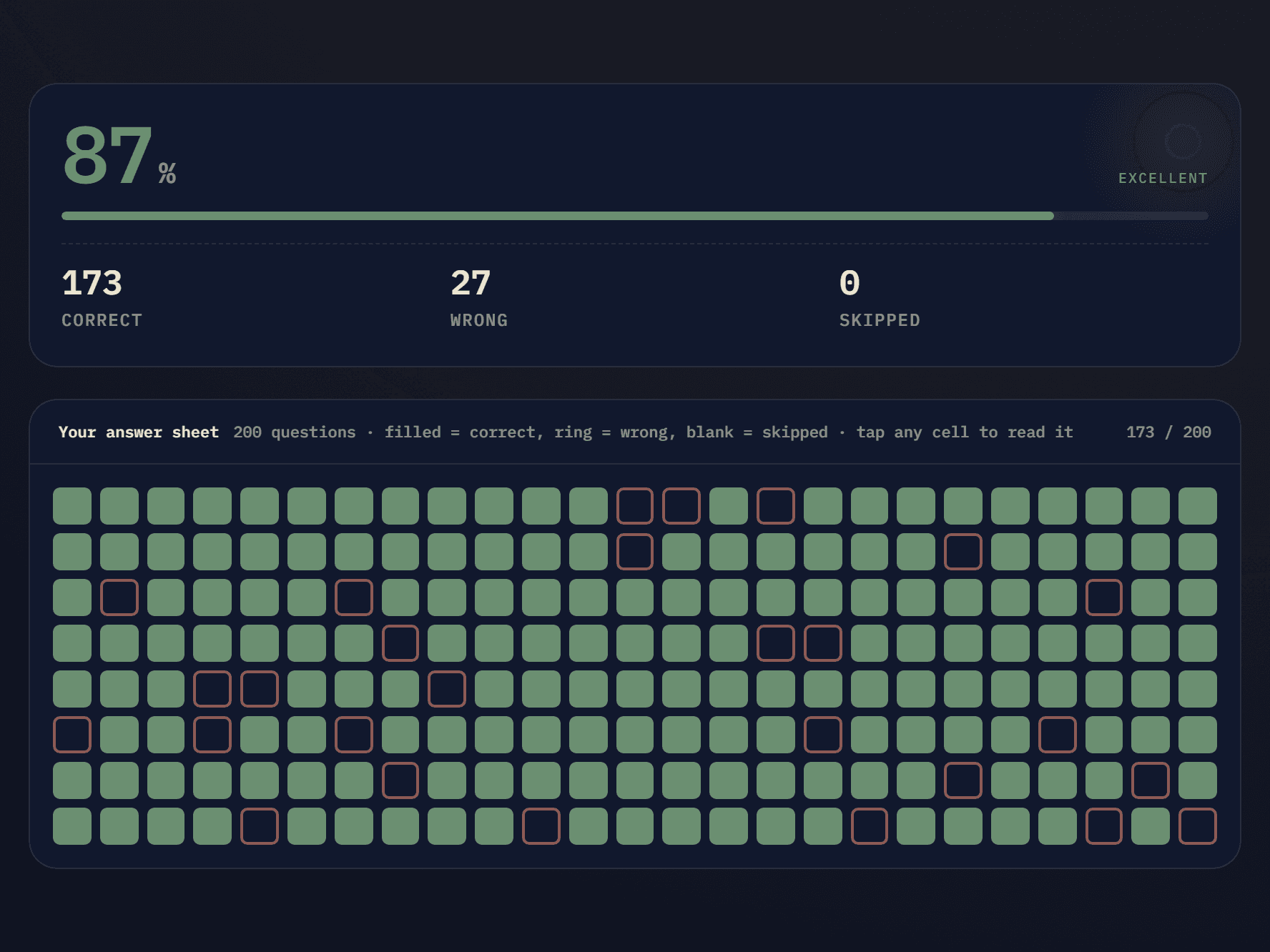
Go through each mock the same day or the next. Sort every mistake:
- Didn't know it: back to the textbook.
- Knew it, but slipped: slow down on that question type.
- Ran out of time: practise timed sets.
Mistakes to avoid
- Skimping on Maths. It's 100 of the 200 questions.
- Leaving English to the end. Vocabulary takes months to build.
- Waiting until you feel "ready" to sit a NET. Only your best score counts.
- Leaving questions blank. There's no negative marking.
- Taking mocks without reviewing them.
Frequently Asked Questions
How should I start preparing for NUST NET 2027?
Go chapter by chapter through FSc Maths and Physics, solving 20 to 30 NET-style MCQs after each chapter, and do 15 minutes of English vocabulary a day. Start with the topics that carry the most questions, such as trigonometry, calculus and Motion and Force.
What is the NUST NET-Engineering pattern?
200 MCQs in 3 hours: Mathematics 100 (50%), Physics 60 (30%) and English 40 (20%). There is no negative marking, so never leave a question blank.
Should I take an early NET series?
Usually, yes. NUST counts only your best score, so an early series is low-risk and shows you the real test. NET-2, from January to March, suits most FSc students. Each series has its own registration and fee.
How many mocks should I take before NET?
Take two or three full timed mocks a week in the final phase, and review each one the same day or the next. Sort every mistake into didn't know it, knew it but slipped, or ran out of time.
How much does NET count in NUST merit?
NET is 75% of your NUST aggregate. FSc counts for 15% (Part-I if you're still in second year) and Matric for 10%.
Next steps
- NET-pattern papers: practise subject by subject.
- Full NET mocks: 200 questions under exam timing.
- NUST aggregate calculator: work out the NET score you need.
- NUST NET tips for success: test-day strategy.
The pattern, series dates and merit formula are from NUST's admission pages, as checked for our NET 2027 posts in October 2026. NET-2 to NET-4 dates are tentative, so check NUST's site before you register.